



Key Takeaways
- Vinod Khosla leads Khosla Ventures, a venture capital firm that backs disruptive tech companies like Nas.com, a platform that manages marketing and ads for small businesses.
- Khosla says “AI will be able to do 80% of jobs by 2030” and sees tools like Nas.com as giving everyday people access to coding, marketing and design.
- Khosla prioritizes a founder’s “learning rate above everything else.”
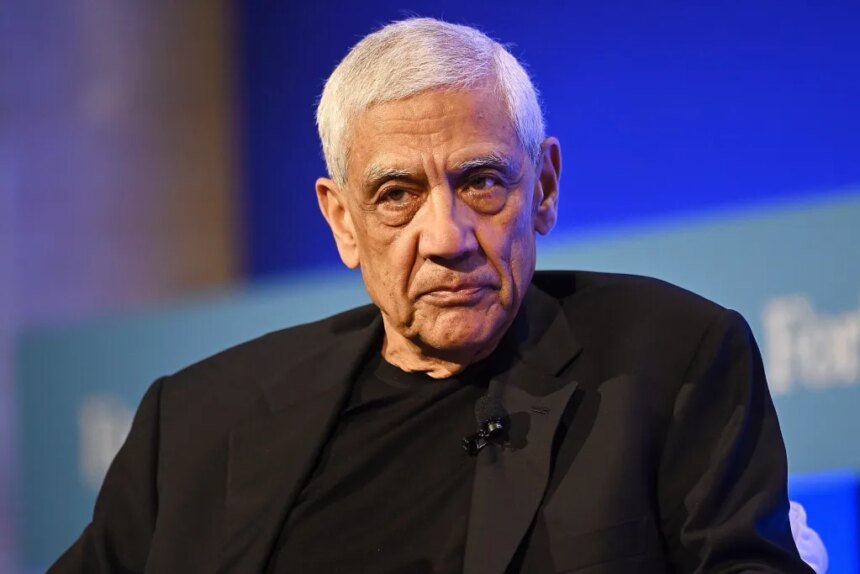
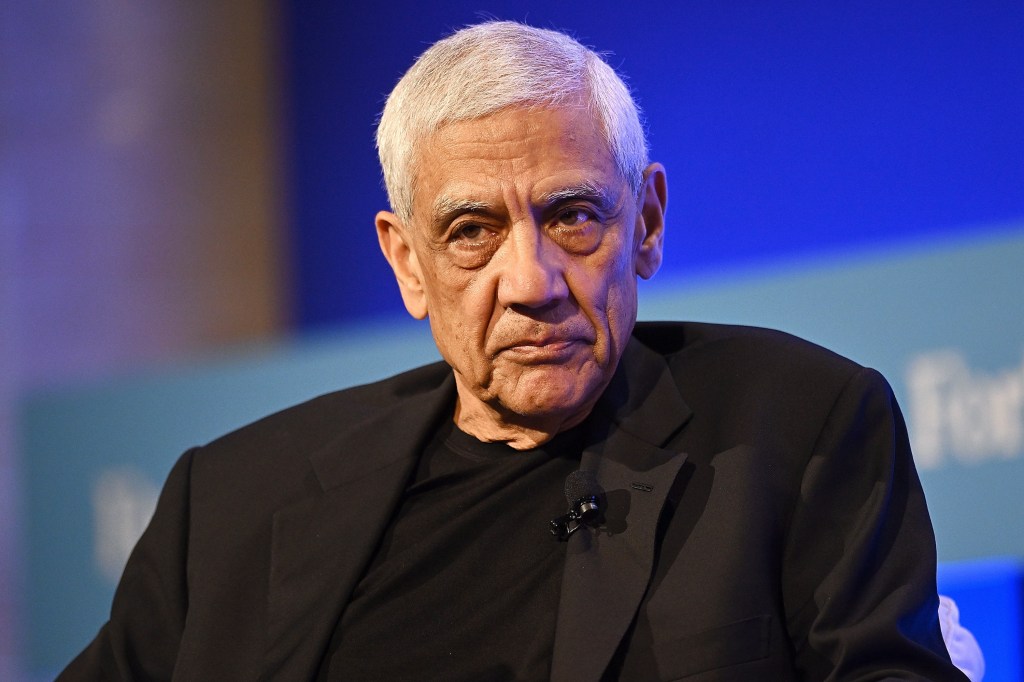
Vinod Khosla, 71, still remembers the magazine article that rewrote his life. As a teenager in India, the son of an army officer with no ties to business or technology, he read about the founding of Intel and decided he wanted to build a company like that someday.
That unlikely obsession carried him from Delhi to Stanford, then into Silicon Valley’s inner circle. In 1982, he cofounded Sun Microsystems, a pioneering technology company famous for creating the Java programming language and manufacturing computer workstations, servers and software.
After Sun, Khosla became a prominent venture capitalist at Kleiner Perkins before starting the venture capital firm Khosla Ventures in 2004. The firm manages more than $15 billion in assets and focuses on investing in tech-based disruptive companies.
In April, Khosla Ventures led a $27 million Series A funding round for Nas.com, an AI platform built for solopreneurs. The platform creates online stores, produces marketing content and manages ads for creators and small business owners, making it easier for individuals to start and grow a business on their own. It has already helped create four millionaires, founder and CEO Nuseir Yassin told Entrepreneur.
Khosla Ventures has also invested in OpenAI, DoorDash and Instacart, among others. Khosla has a net worth of $15 billion, according to Forbes.
The following interview with Khosla has been edited for clarity and concision.
What made you decide to invest in Nas.com?
I like to invest in companies that could not have existed five years ago and will be inevitable five years from now. Nas.com is one example.
The company is trying to solve an essential problem for every business owner: finding customers.
Nuseir understood that the bottleneck was never talent or drive. It was marketing infrastructure. Anyone can build an online website. But very few knew how to find the customer.
That is the problem that has killed more small businesses than any recession in history.
I predict AI will be able to do 80% of all jobs by 2030. The good news is that AI will also be available to the everyday person who has an idea to start something of their own. Coding, customer service, marketing, and design are no longer blockers. This means millions of new entrepreneurs will be born. What I see is massive wealth creation opportunities.
When you look at a potential investment, what are the first two or three questions you ask yourself?
Is this important? Can it change the world in some meaningful way? And can this team do the nearly impossible? I prefer not to invest in incremental improvements. The second question is whether the founder can be wrong about everything except the big thesis and still find a way to win. Plans change. What matters is whether the person can navigate that.
What traits do you look for in founders?
Learning rate above everything else. I argue with founders about positions I don’t believe to see whether they push back or just agree. The ones who cave are not the ones I back. I want someone with the intellectual confidence to say I am wrong and here is why. Beyond that, I want someone who is irrational about the importance of what they are building. Rational people don’t do unreasonable things. Building a company is fundamentally unreasonable.
You invest more in people than plans. What are you trying to understand in the first meeting?
Whether this person can be consistently wrong and still get to the right answer. Every plan fails on contact with reality. What I am really asking is whether this founder has the judgment and stubbornness to find a new path when the original one closes. The roadmap is almost irrelevant.
You routinely go into “uncharted territories” where other VCs won’t go yet. What are the leading indicators that a strange idea is a good contrarian bet versus a science project?
Is there a plausible path to a real outcome, even if every step is highly uncertain? Science projects fail because there is no path. Contrarian bets succeed because the path exists even if nobody else can see it. I also ask whether the world is moving toward this idea regardless of the startup. If the underlying forces are aligning and the startup is just accelerating what was already coming, that is a very different bet than trying to change human behavior from scratch.
What made you decide to take a chance on OpenAI?
It was not a chance. I first mentioned AI publicly in 2000 and wrote about it for years. By late 2018 it was a conviction that had been building for nearly two decades. It was bold, early, and obviously impactful if it worked. Those are exactly the three conditions I look for. The size of the bet reflected the size of the conviction.
What is your opinion on college degrees?
I tell kids to only color outside the lines. My second slide at high school talks is about why you should disregard your teachers. College teaches you what is known. Entrepreneurship requires you to work on what is not known yet. What matters is not the degree. It is whether you developed the ability to learn. The most valuable skill in the AI era is learning how to learn.
What would you recommend for a college major?
Whatever makes you genuinely curious. The narrow specializations that were the surest path to career advancement are being hollowed out by AI. What will matter is whether you can connect dots across disciplines and shift as the landscape changes. Study something that teaches you how systems work and how to think rigorously. The specific subject matters far less than people think.
You’ve said you start every founder conversation with, “Where do you want to be in 2030?” What distinguishes a compelling 2030 answer from a shallow one?
A shallow answer describes a larger version of what already exists. A compelling answer describes a world that has been structurally reorganized. I want to hear a founder articulate how the underlying assumptions of their industry have changed. If the answer sounds like a reasonable extrapolation of today, it is probably not interesting enough.
You’ve argued AI will upend every business and that winners will “obsolete existing players on cost, quality, or speed.” Where are founders still underestimating AI’s impact?
Healthcare is the biggest one. People keep building AI tools that assist doctors. I want to see AI that makes expertise free and universally available. Education is the other one. We could fundamentally restructure how people learn at a fraction of current costs and almost nobody is being truly bold about it. Almost every business is up for reinvention.
You often say some problems are “too important not to work on,” regardless of success odds. Which important problems are founders avoiding right now?
The ones that require changing large institutional systems. Healthcare infrastructure. Education. Climate at real scale. These are hard and slow and incumbents fight back. Founders default to problems where the path to revenue is clear and fast. But the most important problems are the ones where the incentive structure is broken and somebody has to work against it for a long time before it pays off.
Looking ahead to 2036, what does the world look like?
A five-year-old today is unlikely to need a job in the traditional sense when they grow up. The cost of almost everything collapses when labor becomes effectively free. GDP growth accelerates. Access to expertise becomes universal. The constraint on human potential shifts from economic to something more fundamental. The question stops being whether you can afford healthcare or education and starts being what you actually want to do with your life. The work that survives will be work people choose, not work they are compelled to do to survive.
Key Takeaways
- Vinod Khosla leads Khosla Ventures, a venture capital firm that backs disruptive tech companies like Nas.com, a platform that manages marketing and ads for small businesses.
- Khosla says “AI will be able to do 80% of jobs by 2030” and sees tools like Nas.com as giving everyday people access to coding, marketing and design.
- Khosla prioritizes a founder’s “learning rate above everything else.”
Vinod Khosla, 71, still remembers the magazine article that rewrote his life. As a teenager in India, the son of an army officer with no ties to business or technology, he read about the founding of Intel and decided he wanted to build a company like that someday.
That unlikely obsession carried him from Delhi to Stanford, then into Silicon Valley’s inner circle. In 1982, he cofounded Sun Microsystems, a pioneering technology company famous for creating the Java programming language and manufacturing computer workstations, servers and software.
After Sun, Khosla became a prominent venture capitalist at Kleiner Perkins before starting the venture capital firm Khosla Ventures in 2004. The firm manages more than $15 billion in assets and focuses on investing in tech-based disruptive companies.

