



The sale of a marquee digital media company on Succession, the HBO series that ran from 2018-2023 , was always going to end badly.
When Kendall Roy, heir-apparent to a fictional media conglomerate, bursts into the offices of his newly acquired hot media startup Vaulter, dripping with billionaire confidence, it doesn’t take a degree in dramaturgy to guess where this is going. The moment the Roy family finds out Vaulter may not turn a profit quite as quickly as expected, they shut it down and strip it for parts.
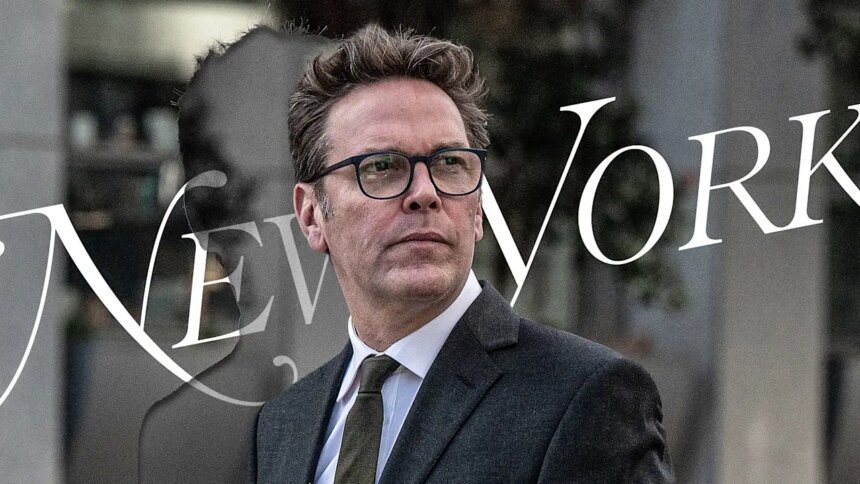
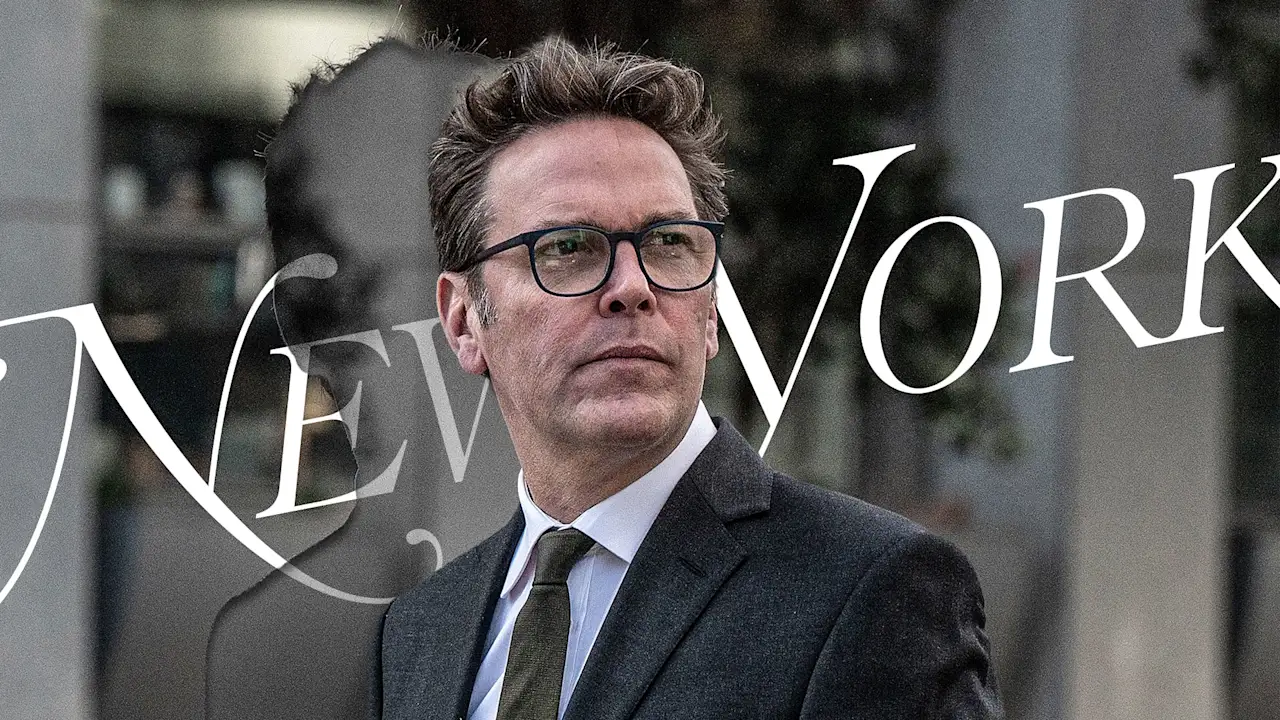
Considering the Roy family is primarily, almost explicitly based on the Murdoch family of News Corporation infamy, it’s hard not to see the glint of the grim reaper’s scythe in the news that James Murdoch has just purchased half of Vox Media, including all of New York Magazine. It certainly looks like a case of life imitating art that itself was imitating life.
But reading the tea leaves of reality is more complicated than predicting the end of arcs on Succession, and early signs suggest doomsayers of the Murdoch deal may be in for a plot twist.
James Murdoch is (mostly) not Kendall Roy
Before delving into the details of the deal itself, it’s important to get a sense of James Murdoch—the person behind the notorious family name.
Much like Kendall and Roman Roy, the Succession siblings played by Jeremy Strong and Kieran Culkin respectively, James and Lachlan Murdoch had long been vying to one day take over their father Rupert Murdoch’s media empire. True to Kendall-form, James is less dyed-in-the-wool than his father and brother, advocating against climate denial as early as 2009, and he was also more interested in new media landscapes. He served as CEO of 21st Century Fox from 2015 until its sale to Disney in 2019, at which point he broke off from the Murdoch operation to found his own private investment and holding company, Lupa Systems.
What happened next proved as operatic as anything on Succession.
In July 2020, James resigned from the News Corp board, stating in a resignation letter that he was leaving over objections to “editorial content.” Whether he was referring to Fox News’ climate denialism, COVID misinformation, or ceaseless support of the Trump regime is anyone’s guess. (Given his later work establishing the pro-democracy and climate-focused Quadrivium Foundation, one might safely assume: all of the above.) In any case, the letter signaled James had made a complete break from the Death Star of his father’s empire.
In the years since, James has proved himself as an investor who doesn’t follow the slash-and-burn playbook. His Lupa Systems has lent support to Robert DeNiro’s film and TV company Tribeca Enterprises, purchased a significant stake in Art Basel, and sought media opportunities in emerging markets in India. Meanwhile, his brother eventually took control of the remaining Fox Corporation assets from his father in 2025, conclusively ending the long-simmering succession drama—and cementing James’ reputation as “the good Murdoch.”
Vox and New York Magazine are not Vaulter
While it might have seemed farfetched a decade ago for a Murdoch scion to purchase the liberal-leaning Vox Media and New York Magazine for anything other than nefarious or mercenary reasons, James Murdoch’s trajectory of late suggests a sharper strategic focus.
Over the last 15 years, it’s become ever more obvious that digital advertising and search engine referrals are no longer viable means of keeping media companies afloat—let alone scaling them. By now, every investment firm should understand that buying up a hot, many-tentacled media property and trying to cost-cut a path to profits only results in Zombie Deadspin. That’s not to say it will never happen again, just that it would be quite a choice for someone with the background and aspirations of James Murdoch in Luke Skywalker mode.
What seems more likely is that Murdoch and the Lupa Systems team recognize that Vox Media Network’s personality-driven podcasts, including On with Kara Swisher, and the hip, conversation-driving verticals of New York Magazine represent the kind of deep and personal consumer connection whose value in the current media landscape goes far beyond clicks. Making growth-at-all-costs moves that would mess with the cultural potency of these elite brands would be like lighting a dump truck full of money on fire. (Lupa Systems reportedly spent over $300 million on this deal.)
One could be forgiven for assuming the worst, though. Acquisitions of trusted media brands have not had a stellar track record lately, even apart from the private equity-assisted downfalls of years past. Skydance’s acquisition of Paramount, for instance, quickly led to a predictable layoff bloodbath, not to mention an ideological overhaul of CBS News that seems to have alienated its old audience without bringing in a new one. Given the Murdoch of it all, the Vox deal reads on paper like a chance for Fox News to execute a finishing move on a magazine whose namesake is synonymous with East Coast snobbery.
In order for that to be the case, though, James Murdoch’s entire career would have to be revealed as a convoluted long con spanning multiple decades.
And that would be a plot twist so farfetched, any Succession writer pitching it would’ve been immediately fired.

