




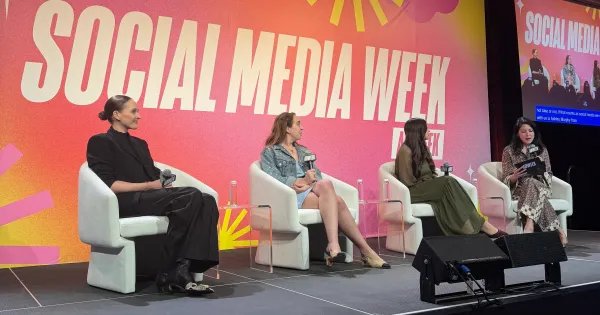

For instance, Rare Beauty’s newsletter, Rare Beauty Secrets, is a vehicle for unpolished storytelling that audiences cannot get on Instagram or TikTok; recent editions have explored niche topics like accessible packaging design and the engineering behind a foundation’s pump mechanism.
The brand learned a valuable lesson early, according to Finney Harden: Tutorial-style content flopped, while raw iPhone footage generated outsized engagement.
“Do not treat newsletters as a sales channel,” Murphy said. “It’s really about relationships.”
Zafar, who oversees UTA’s Gen Z practice and writes her own newsletter, framed the shift in broader cultural terms: Audiences are actively seeking spaces that feel chosen rather than algorithmically assigned.
“Mini viral,” Zafar said, “is just sharing an article you love with your friends in a group chat. That’s where culture is.”
The panelists broadly agreed that the durability of newsletters as a channel comes down to consistency, point of view, and resisting the urge to repurpose social content from other platforms wholesale.
In an automated media environment, the human voice is the moat.

