






While it seems like nearly every marketer is using some kind of AI tool, just how prevalent is true integration? And with such a steep learning curve, how can they use the tools efficiently?
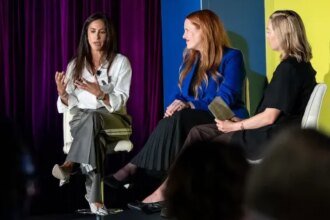
During a Brandweek 2026 workshop co-hosted by Luma, Michele Madansky, marketing research consultant at Michele Madansky Consulting (MMC), sat down with Alexia Adana, forward deployed creative lead at Luma, to discuss how marketers are currently using AI and demonstrate how Luma’s AI agents and creative platform can power the future of marketing.
How creatives are using AI today
Madansky opened the panel by sharing the results of Luma’s first-ever annual report, “State of Creative Professionals and AI: 2026,” which surveyed 760 creative professionals.
According to Madansky, the headline of the report is that 81% of creative professionals are using AI to create and release content. But there was a caveat, and she cited her “favorite” finding from the study as evidence that while adoption is high, integration is still being figured out.
“On average, creative organizations evaluated 6.1 tools, adopted 4.3, and stopped using three. This is churn,” Madansky said. She explained that the results point to heavy trial with the understanding that not everything will work or have lasting impact.
The survey includes several more findings, including the idea that agencies are leading AI adoption, while freelancers are lagging behind.
It also broke down the types of content being created, with written copy or image creation ahead of video. “Video is harder to produce,” Madansky explained.
Powering creative decisions
Adana took the stage to demonstrate how Luma’s AI agents and platform can help marketers. She used examples from a real workshop that Luma held with Oakley, the eyewear company owned by parent company Luxottica. In real time, she interacted with a Luma AI agent via chat, keeping the workflow simple.
“Think of the agent as this very powerful, pretrained tool that speaks to the generative AI models on your behalf. So, you do not need to be a technical prompter anymore to create these high-fidelity assets,” Adana explained. “You just need to be somebody with a great idea and really solid direction to give that agent to go execute.”
Adana showed how Luma builds a “Brand DNA” by uploading any data that would have brand guidelines, like typefaces and logos. Past campaigns can also be uploaded so Luma can learn what has worked.

