





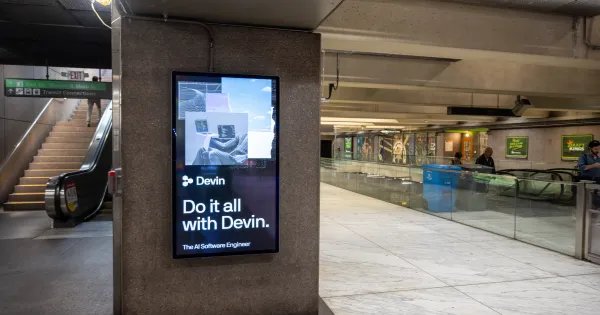

But AI is changing more than just what consumers encounter online. It is also changing whether they need to visit the open web at all.
Answer engines such as ChatGPT, Claude, and Gemini increasingly answer questions without requiring users to visit the websites from which that information originated. For publishers, that threatens to reduce referral traffic, shrinking the audiences—and ultimately the advertising inventory—that the open web can offer.
Agents could accelerate that shift. Products like Muse and Dots promise to accomplish tasks on behalf of consumers, potentially bypassing not just websites themselves but the advertising that subsidizes them.
Last week, for instance, Amazon blocked Muse from crawling its website. Whatever the specific motivations behind the dispute, it highlights an existential problem for advertising-supported destinations: An agent can extract the utility of a website without ever seeing the ads that help pay for it.
Taken together, these forces—the declining trust in online content, the growing ability to bypass websites, and the rise of intermediaries that don’t consume advertising—could make parts of the digital ecosystem less valuable to marketers.
At the same time, out-of-home advertising has become considerably more sophisticated.
New, eye-catching creative can appear on digital screens programmatically, giving marketers some of the targeting and flexibility they have come to expect online while retaining a defining advantage of physical advertising: You cannot scroll past a DOOH display.
And as more companies have embraced the logic of becoming media businesses, the opportunity has expanded further. Ride shares, airlines, grocery stores, retailers, and other businesses with physical footprints and captive audiences can increasingly turn those environments into advertising inventory.
In a sense, the logic of retail media is escaping retail. Any company that controls a physical space where people spend time has the ingredients to become a media owner.
But the same forces making physical space more valuable to advertisers risk making that space less pleasant for everyone else.
In New York, the phenomenon can already feel like a scourge, as public spaces increasingly give way to kiosks and screens featuring a constant stream of advertising. In a recent episode of his podcast, New York Times journalist Ezra Klein bemoaned the situation.
“A column I have wanted to write—and have not written, in part because I’ve been afraid of the reaction to it—is that as a newcomer to New York City (I moved here three years ago) I find the presence of the advertising on the New York City subway and on the buses really sad,” Klein said.

