





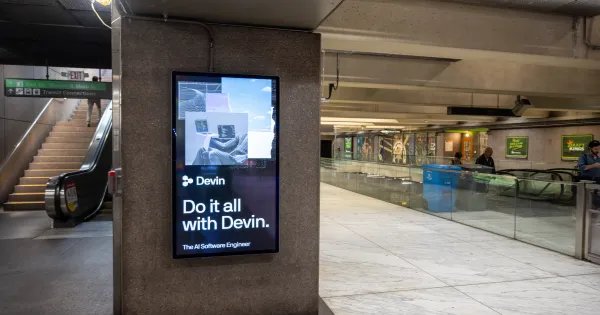

The natural counterargument is that those advertisements help subsidize public transit, keeping it more accessible for riders. But the M.T.A. receives only about 1% of its operating revenue from advertising, according to Klein. He raises an intriguing question: Would transit users swallow a modest price increase in exchange for an ad-free subway system?
The question points to a tension that will only grow more important if the out-of-home boom continues.
In nearly every advertising channel, marketers must balance reach against frequency. Show someone an ad too many times and its effectiveness declines; eventually, familiarity becomes annoyance. Online, advertisers can use frequency caps to limit that exposure. And consumers retain an even simpler option: They can set down their phones, turn off the television, or put away the magazine.
Out of home is different.
As more of the physical world becomes advertising inventory, consumers have fewer ways to opt out. A person can close a browser tab or delete an app. They cannot close a subway platform.
For two decades, advertising followed consumers from the physical world onto the internet. Artificial intelligence may now be helping push some of that value back in the other direction.
The question is how much of the physical world consumers are willing to give it.
Talking Heds
Scripps Substack: The local broadcast company Sinclair, whose stations reach roughly 38% of U.S. households, is launching a national news brand on Substack, called The National Press, according to a Tuesday report from Axios. The outlet will feature reporting from across the Sinclair network, which encompasses around 1,200 journalists and 60 local newsrooms, per Sinclair president and CEO Chris Ripley. The rollout is an unusually experimental gambit from the otherwise staid news organization. Through the venture, which will have both free and paid tiers, Sinclair will be able to gauge the news appetite of the Substack ecosystem. Have any other national news organizations launched a flagship Substack? If you know, shoot me an email at mark.stenberg@adweek.com.
Express Brew (EXCLUSIVE): On Monday, Morning Brew acquired the creator-led editorial brand Express Checkout in an all-cash transaction, Morning Brew CEO Robert Dippell told me. Express Checkout, a two-person operation cofounded by Nate Rosen and Jenna Movsowitz, covers the CPG industry through a mix of newsletters, podcasts, and short-form social video. Through the deal, Morning Brew will gain 100% IP ownership of Express Checkout, while Rosen and Movsowitz will join Morning Brew as employees, with incentives to grow the brand. While many publishers are talking about creators, few are working with them so actively as Morning Brew, whose “creator-focused monetization” is up more than 50% year over year, per Dippell.
Skydance Rises: Have you heard? Warner Bros. Discovery is now Skydance, part of a David Ellison media empire that, as of just three years ago, did not even exist. Now it encompasses Paramount, Discovery, Warner Bros. Discovery, CNN, HBO, CBS, TNT, Nickelodeon, and many more. Also: $80 billion in debt. The company would appear to be a behemoth, and yet from a streaming perspective, it is still firmly just in fourth place. There is more to media than direct-to-consumer subscribers, but the entertainment Voltron will still face an uphill battle in convincing advertisers that its assemblage of sub-scale platforms is a must-buy.

