


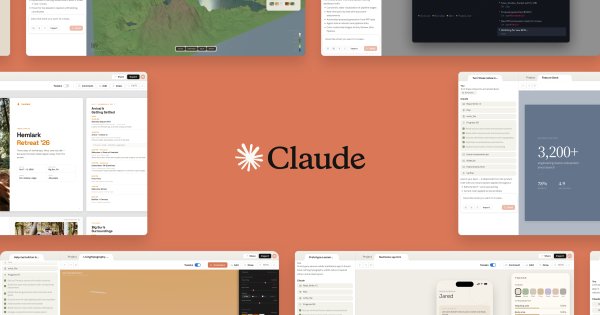


Testing teams have used Claude Design to build product mockups and wireframes, pitch decks and presentations, alongside marketing content like social media content, webpages, and campaign visuals. Claude Design also allows users to create more advanced prototypes and digital experiences sans manual coding, including voice interactions, video elements, 3D visuals, and special effects.
Canva, which in theory could view AI asset generators like Claude Design as competitors, considering the platform has its own native AI-powered visual generation tools, has worked with Anthropic for a year. The company is leaning into the partnership further as it tries out Claude Design. The company’s CEO and cofounder Melanie Perkins said the integration will make it “seamless for people to bring ideas and drafts from Claude Design into Canva, where they instantly become fully editable and collaborative designs ready to refine, share, and publish.”
At Datadog, Claude Design has already proved capable of shortening iteration periods and “enabling live design during conversations,” according to product manager Aneesh Kethini. “We’ve gone from a rough idea to a working prototype before anyone leaves the room, and the output stays true to our brand and design guidelines. What used to take a week of back-and-forth between briefs, mockups, and review rounds now happens in a single conversation.”
Anthropic hopes the new product will appeal to both advanced designers and nontechnical users. “Even experienced designers have to ration exploration—there’s rarely time to prototype a dozen directions, so you limit yourself to a few. And for founders, product managers and marketers with an idea but not a design background, creating and sharing those ideas can be daunting. Claude Design gives designers room to explore widely and everyone else a way to produce visual work,” the company said in a press release shared with ADWEEK.
Claude Design is accessible to Claude Pro, Max, Team, and Enterprise subscribers.


