


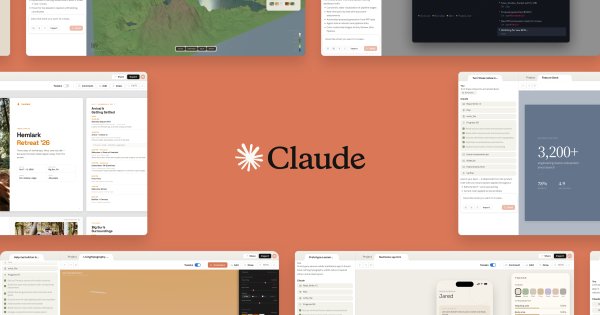

Anthropic Labs, the team dedicated to incubating and testing experimental AI products like within Anthropic, today unveiled Claude Design, an AI-powered platform that automates the creation of designs, slides, one-pagers, and other marketing and sales collateral. It’s designed to be easy to use for both experienced designers and nontechnical users.
The product is built on Claude Opus 4.7, the upgraded version of Anthropic’s flagship model, launched Thursday.
The product is poised to rival other design software titans like Figma and Adobe, both of which have been aggressively investing in AI tools to streamline design workflows, including prompt-based interface and asset generation.
Designers, marketers, creatives, and sales teams can use Claude Design through a familiar natural language interface. They can simply tell the system what it wants to make and watch Claude produce an output based on that input. Then, users can edit the asset directly, or prompt Claude to make changes through chat conversation, inline comments, or custom sliders, a Claude tool that lets users manipulate images, data, or other elements in real time.
During onboarding, users plug in foundational reference materials like design files and codebase. Claude Design then creates a design system that will be used as the de-facto standards for each project, standardizing colors, typography, and other design elements. Users can update or refine the design system, and can create more than one.
Once they’re set up, users can input text prompts, refer Claude Design to their codebase, upload documents and visuals, or even pull elements straight from a website using Claude’s web capture feature. Claude Design will produce outputs based on these inputs; then, users can make edits to polish their designs and can collaborate with colleagues in a shared interface with Claude. Then, designs can be exported in various formats or plugged into Claude Code to start building.
Claude Design is currently in a research beta with select companies, including design software platform Canva, cloud monitoring software company Datadog, and online learning platform Brilliant.


