





This post was created in partnership with Treasure AI
AI helps marketers move faster. But when customer context gets lost between teams, that speed can carry a bad assumption all the way to execution.
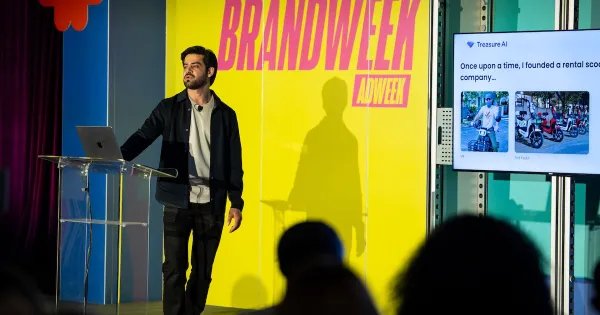
During a Brandweek 2026 workshop co-hosted with Treasure AI, Rahul Mulchandani, lead product manager of AI products at Treasure AI, showed how preserving customer context across a workflow can cut down on reworking and leave marketers with more time for the decisions that still demand human judgment.
Faster mistakes are still mistakes
Mulchandani illustrated the problem with a story about a scooter rental company he founded. One analyst flagged a customer named Marco as lapsed because a report showed he had not taken a ride in 21 days. Another ranked Marco as the company’s top customer since he had switched to a subscription model and was riding more than ever.
Both reports were accurate, yet together they produced the wrong marketing decision. Mulchandani acted on the first and sent Marco a win-back discount that didn’t reflect how he was actually using the service.
AI wouldn’t have fixed the problem. A stronger model still can’t use information it never receives, and a longer prompt can’t include context the marketer doesn’t know is missing.
“If we are using AI with the same workflow, it is bound to make mistakes at a faster rate,” Mulchandani explained. “Yes, you learn faster, but you continue making the same mistake if the workflow is the same.”
Putting shared context to the test
During the workshop, attendees explored the alternative in a live exercise using the same dummy retail data set. With natural-language prompts, they identified a customer segment, examined meaningful differences within it, and shaped email treatments for distinct groups.
No structured query language. No data export. No ticket sent to an analytics team. Participants asked questions directly, reviewed the agent’s response, and refined the work from there. The ability to query the data in natural language shortened the distance between a marketing question and the information needed to answer it.
Each step drew from the same underlying context, allowing one stage of the work to inform the next instead of getting condensed into another brief and handed off. Brand guidelines and guardrails could live there, too, giving the AI clearer boundaries as the work evolved.

