




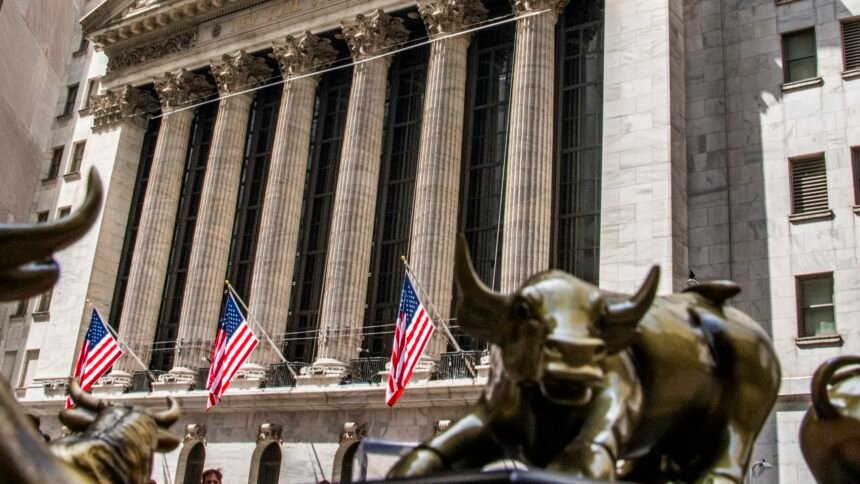

The New York Stock Exchange on April 14, 2025.
View Press | Corbis News | Getty Images
A version of this article first appeared in CNBC’s Inside Wealth newsletter with Robert Frank, a weekly guide to the high-net-worth investor and consumer. Sign up to receive future editions, straight to your inbox.
Nearly 1 million people became millionaires in 2025, largely thanks to a thriving stock market, according to a new report by UBS.
The Swiss bank estimated that the United States is responsible for nearly half of these newly minted millionaires, adding an average of more than 1,200 new millionaires a day last year for an annual gain of about 441,000.
Stock market gains boosted global personal wealth by 10.8%, the biggest jump since 2017 and more than double the rate of 2024 and 2023, UBS found. However, this robust growth was belied by declines in median wealth in most of the 56 markets monitored by UBS, pointing to a growing wealth gap.
In the U.S., for example, median wealth per adult has declined by nearly 20% from 2020 to 2025, while average wealth has increased by about 10% over the same period of time, net of inflation, according to the bank’s data analysis.
UBS estimated that the world’s millionaire population, which the bank puts at 58 million, owns nearly half of the world’s wealth, or approximately $250.6 trillion.
UBS economist James Mazeau told CNBC that richer individuals reaped bigger gains compared to the broader population last year as they have more exposure to financial markets, noting that the U.S. stock market rose by approximately 18% in 2025.
“The higher you go in the wealth bands, the more wealth creation will tend to be linked to either the performance of your business or your investment portfolio — or both,” Mazeau said at a media conference.
These gains are also uneven among the ranks of millionaires. The bank estimated that the combined assets of so-called “everyday millionaires,” or individuals worth $1 million to $5 million, has jumped by 170%, net of inflation, since 2000. Over that same period, the collective fortune of richer peers soared by 343%.
As for the world’s billionaires, their collective net worth surged by nearly 25% in the year ending in April, according to UBS. However, the report noted that much of this increase was due to an increase in the number of billionaires, not just three-comma club members getting richer.
The depreciation of the U.S. dollar last year also contributed to discrepancies in global wealth creation as the bank tracks wealth in terms of USD. America’s millionaire population, while still the largest in the world, increased by a modest 1.9% in 2025, while most European and Middle Eastern markets saw higher percentage gains, including Turkey (6.4%) and the United Arab Emirates (3.5%). In terms of combined personal assets, the Americas’ growth rate was estimated at 8.5%, outranking the Asia-Pacific region at 5.9% but less than half of the 17.5% rate seen in Europe, the Middle East and Africa.
Mazeau said it is too early to predict how the Iran war will weigh on high-net-worth individuals in the Middle East. Asset allocation and currency trends are two of many factors that will determine the outcome.
“It will really depend on what share of international assets are held by these investors. If you are, let’s say, based in the Middle East, and most of your wealth is tied into U.S. stocks, and furthermore, you have a currency that’s pegged to the U.S. dollar, well, the currency moves really don’t matter at all,” he said. “Now, if you tend to diversify your holdings into other investments that tend to be in currencies that have appreciated versus the U.S. dollar, and if we measure things in U.S. dollars, then that will, for 2026 get a bit better outlook.”
He added that investors may have changed their portfolios as a result of the conflict.
“Will they diversify their holdings? Will they make more direct investments in the U.S.? How will the situation that unfolded change the investment landscape and the investment philosophy and asset allocation?” he said. “I don’t know yet.”

