






This post was created in partnership with Texas A&M University
There’s plenty of competition in higher education, and not just among frenzied applicants. Colleges and universities also compete—including for attention.
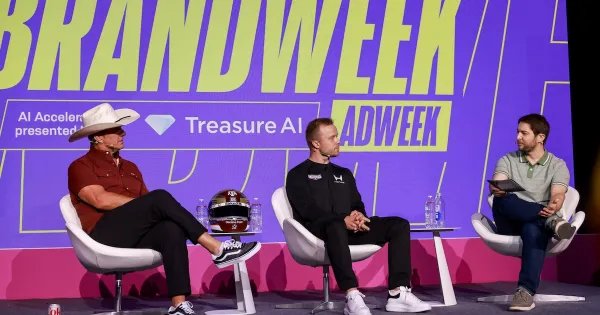
Innovating beyond textbook examples of higher ed marketing can pay off. During a Brandweek 2026 fireside chat co-hosted with Texas A&M University, Bill Bradley, deputy TV, media, and sports editor at ADWEEK, sat down with R. Ethan Braden, chief marketing and communications officer at Texas A&M, and professional racing driver Felix Rosenqvist to discuss the school’s unconventional partnership.
A winning approach
Braden began the conversation by prompting a round of applause for Rosenqvist, winner of the 2026 Indianapolis 500. Rosenqvist had worn a helmet featuring Texas A&M’s logo during the race, which meant the public university became part of the storyline of the Indy 500’s closest-ever finish.
“I like to say, ‘marketing can’t create lightning, but we can create a lightning rod,’” Braden said. “We’re trying to put our brand in environments where potentially something extraordinary can happen, and in this case, Felix created the lightning.”
Texas A&M debuted as a sponsor of Rosenqvist during the 2025 racing season. The school had recognized the advantages of the logo placement long before the big win. “We identified that the real estate of this helmet, when they go to the in-car camera on Fox, is incredibly valuable,” Braden explained.
He characterized the helmet opportunity as “a blue ocean for higher ed,” given the scarcity of competition. It also provided an opening to discuss the school’s association with engineering, advanced manufacturing, patriotism, teamwork, and collaboration.
Driving awareness
Braden shared that the partnership aims to “expose the nation” to Rosenqvist, IndyCar, and “this incredible university that not enough know about.”
Texas A&M’s involvement with IndyCar, as with Nascar, gives the university an avenue to authentically tell its story, Braden said. For instance, the recent Freedom 250 Grand Prix of Washington, D.C., was an opportunity to talk about how the school is “a force for good in the space of American innovation and national defense,” he noted. “We wanted to get national attention and tell a national story on a national stage,” he added.

