


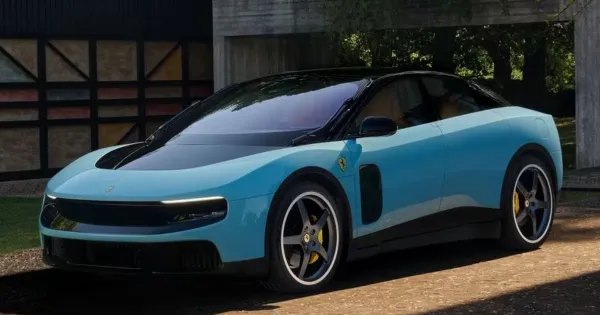

On May 25, Ferrari unveiled the Luce, its first fully electric vehicle. A liftback sedan designed by Jony Ive, priced at $640,000, powered by quad motors producing 1,113 horsepower. The company had spent five years developing it. CEO Benedetto Vigna called it a “very, very important day.”
The market disagreed.
Ferrari shares fell sharply. One analyst called it “the furthest deviation from the brand’s ethos we’ve ever seen.” On social media, the consensus was swift: it looks like a vacuum cleaner.
Markets don’t typically crater over design choices. They crater when they smell the potential for brand damage. Not because Ferrari made an electric car—Porsche did that and investors initially pressed buy. But because Ferrari made a car that doesn’t look, feel, or present like a Ferrari. And that would be a problem.
The Luce is a liftback with a gentle silhouette. No aggression. No suggestion of speed at rest. It was presented in blue—light blue, at that. The Prancing Horse is barely visible. And the name itself, “Luce,” Italian for light, carries the weight of poetry and philosophy. It is the opposite of Ferrari naming convention. F40. F430. 812 Superfast. Superamerica. Names that announce themselves. Luce whispers.
When a brand enters a new territory, the instinct is often to minimize the old codes. Make it feel fresh, contemporary, and unshackled from heritage.
It’s the wrong instinct
The right one is the opposite: lean harder into your distinctive brand assets than you normally would. Make the thing drip with them. Ensure this new departure is unmistakably yours.
When Hermès expanded into ready-to-wear decades ago, the obvious move would have been to drift toward mainstream fashion, to soften the equestrian heritage, and appeal more broadly.
Instead, it leaned in harder. Their runway shows happen at the Garde Républicaine, the historic barracks of the French military cavalry unit. Models wear jodhpurs and harnesses. The Camargue guides the collection—horses, marshes, bohemians. Paddock bags appear alongside dresses. The brand didn’t abandon its DNA when it entered a new space. It weaponized it. The result: consistent critical success, absolute brand loyalty and clothes that look unmistakably Hermès.
Apple launched the Watch in 2015. An entirely new product category. The instinct might have been to make it feel modern, unlike anything Apple had done. Instead, the Watch is a minimalist object with clean display, careful typography, thoughtful spacing, and a focus on reduction to essentials. It is undeniably Apple, sold in an Apple box. The design language extends through every surface, every interface, every interaction.
Burberry moved aggressively into digital and metaverse experiences. Easy to strip those down to pure innovation—no heritage, just cutting-edge tech. Instead, it brought the trench coat and the Nova check into Minecraft. Virtual Try-On for scarves emphasizes the heritage piece. “The Trench Experience” unlocks in its loyalty program. It didn’t dilute the brand to innovate. It innovated in service of what makes Burberry, Burberry.

