


Semafor’s Eight-Figure Event (EXCLUSIVE): In November, Semafor is debuting its second flagship event, called Silicon Valley & the World. The “convening” is set to generate eight figures of revenue on its own, chief commercial officer Rachel Oppenheim told me. Even for a company with events at its core, the figure is a princely sum, driven by 24 commercial partners. In 2025, Semafor brought in around $40 million in total revenue, roughly half of which came from events. Based on that figure, its November conference is set to bring in nearly half that total on its own. As the media industry—and the advertising world more broadly—continue to further embrace physical experiences, Semafor is an example of what that business model looks like taken to its extreme.
Cami Tellez Returns (EXCLUSIVE): If you were of a certain age and on Instagram in 2020, you likely saw an influencer be gifted Parade underwear. The founder of Parade, the then-21-year-old Cami Tellez, was one of the first of a new generation of marketers to understand the primacy of social media marketing. She sold Parade in 2023 and is now back with a new venture, called Devotion, a marketing agency that aims to capitalize explicitly on her understanding of the influencer space and its future. The company has grown quickly in its first year by helping brands connect with micro influencers, spurring Devotion to hire UTA executive Ed Victori as their first chief operating officer. The company is very new and success in marketing is never assured, but the premise of the firm has stayed on my mind since I interviewed Tellez and CEO Jon Kroopf at Casa Cipriani in FiDi earlier this month. Now that algorithms, not follower counts, determine what you see, a “quantity of quality” posts, per Kroopf, could soon be more effective than an endorsement from any singular influencer.
Quote/Unquote
Bob Lord is the CEO of Horizon Media, the largest independent media agency in the U.S., where he oversees its work for clients like Spectrum and Shark Ninja. Horizon aims to set itself apart from its rivals on two fronts: its open ecosystem of technology partners, and its insistence on client ownership of data. Most of his competitors offer neither, he says, because doing so would expose their rich margins and aging proprietary tech.
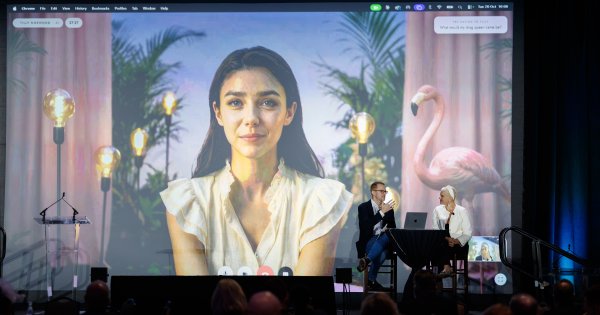
Lord and I met on-site at the ANA conference, where we discussed why marketers need to understand AI models before adopting them, why brands should own the models trained on their data, and the innovative way in which one Horizon client is combining its social and search teams for answer engine visibility. We also covered which ad tech companies he thinks will not survive the arrival of agents.
This interview has been edited.
Mark Stenberg: Most marketers want to start using AI now. Why do they need to understand the models first?
Bob Lord: People are treating AI as a cost-reduction opportunity, but CMOs should be thinking about it as a way to grow their business. If you do that, you should put in the effort to understand how the models work. Years ago, marketers had to learn the funnel. Now they have to learn the models.
Mark: You’ve said brands should own more than their data.

